
Connect Before You Correct
Why connection—not correction—is the first step in responding to behavior

As we enter the home stretch of end of school year, we often see an increase in behavioral escalations. Speaking from experience, these moments are not always easy to navigate—especially when we, as educators, feel activated ourselves.
Last week, we explored how to reframe behavior in the moment. This week, I want to share another critical approach: how we can intentionally connect with students during high-tension moments. As Daniel Siegel reminds us, we need to “connect before we correct.”
When students are escalated - whether that looks like frustration, meltdown, talking back, or complete withdrawal - our instinct is often to move quickly into correction mode. We want to tell students what they’re doing wrong and what they need to do differently.
But in those moment of escalation, it’s very difficult for students (and adults) to process what’s being said. When we are dysregulated, we are not able to fully listen, receive feedback, or make thoughtful decisions. In order to engage in a meaningful conversation and take reasonable next steps, we first need to return to a regulated state.
One of the most effective ways to support students de-escalating is to prioritize connection before corrections.
Here are a few simples ways to do that:
Share your mantra or belief system “I am here for you. I believe in you. I want us to be able to talk about what happened”
Use observable and specific language to validate the behavior you are noticing “I am noticing…” “I can see you are really frustrated…”
Create space without disconnecting - Offer the student an opportunity to talk—but if they’re not ready, give them space. Just be sure to reconnect later (and not too much later).
Once you’ve established connection and the student is more regulated, you can move into problem-solving. One structure that can support this next step is the 5C’s protocol.
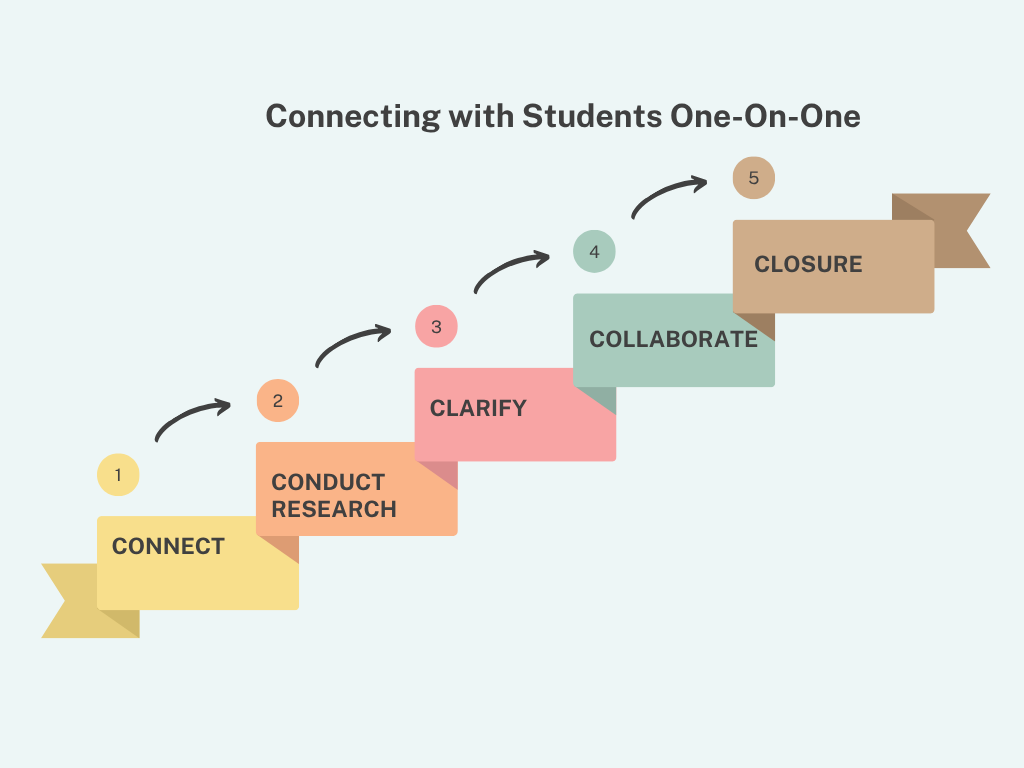
Please click HERE to get the details for this framework step by step.
As you head into the rest of the week, look for one opportunity to practice “connect before you correct.”
Over time, these small moments of connection build something much bigger: trust, safety, and a classroom where students are more willing—and able—to respond to correction.
Best,
Yelena