
Intensive for a Few: Building Deeper Connections with Individual Students
Strategies for supporting the students who need deeper, sustained connection

As we wrap up our series on building individual teacher–student relationships, let's revisit the framework we've been exploring.
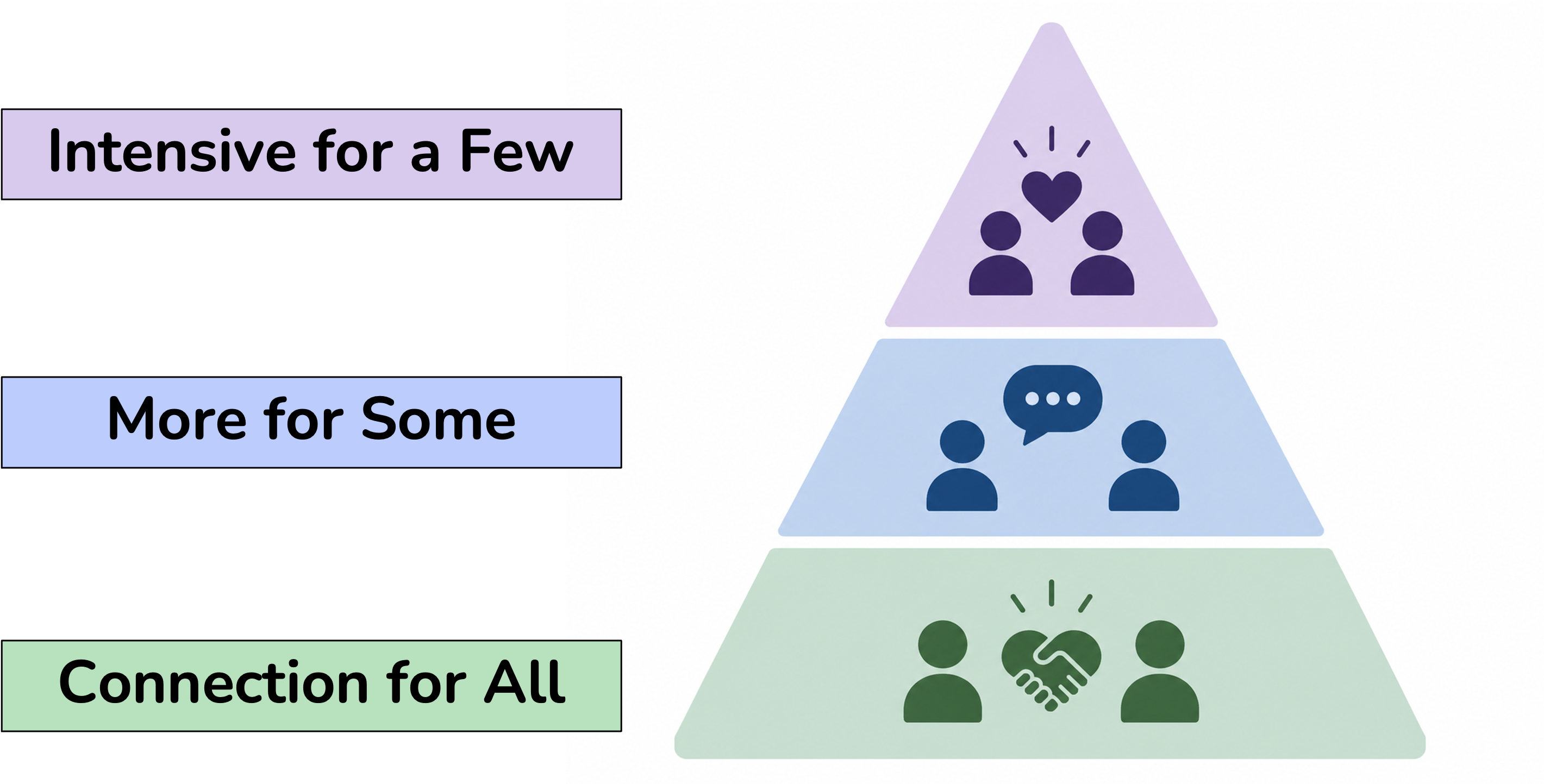
We began with the foundation: Connection for All. At the heart of this level is the understanding that every student deserves connection—just not in the same way. Relationship building is not about treating every student equally; it's about giving each student what they need. While some students require more support and attention, every student deserves to feel seen, valued, and connected.
We then explored More for Some, recognizing that certain students benefit from more frequent, proactive touchpoints. These students need intentional, relationship-based interactions that help build trust and strengthen their connection to school over time.
Today, we turn our attention to the 15–20% of students who need more intensive support.
One of the most important reminders when working with these students is that all behavior is communication. Every behavior is telling us something about a student’s needs, experiences, or skills. Often, the students who seem to push us away the most are the ones who need connection the most.
When we approach students from this perspective, we shift to a strengths-based mindset. Instead of focusing on what students can’t do, we focus on what they can do and how we can support them in continuing to grow.
Students who fall into this level of support typically need deeper, more sustained connection and intervention. Their behavioral patterns may occur across multiple settings, persist over time, or continue despite the relationship-building strategies found within the “More for Some” level.
So what does “Intensive for a Few” look like? Here are several strategies that fit within this second level of support:
Strategy 1: Daily Check-Ins
Scheduled 1:1 check-in’s
Consistent follow up after incidents
Remembering every time you redirect, you reconnect
Strategy 2: Behavioral Cues
Visual supports
Student Buy In
When unexpected behavior occurs:
Ask student “what do you need right now?”
Offer choices (i.e. break, office, clipboard)
Let them know what they need to do first…
“Okay, let’s do these two things first and then you can take a break”
“Yes, let’s go to recess. First we need to do this.”
Flip the Script (When students makes an inappropriate comment, educator responds with positive language - SPEAKING HOPE and holding student to high expectations)
“Educator asks class if they are ready to start the lesson, and Yulya responds, “No, I don’t want to be here.” Educator’s response: “Yulya, I am sorry to hear that, but I am so excited that you are here – come join us. I hope by the end of the lesson you feel differently.”
Remember the key with all of this work, is being CONSISTENT! Because small, intentional moments of connection may not seem significant in isolation, but over time they are often what shift a student’s experience in our classrooms.
If you're interested in continuing to deepen your practice around behavior support, interventions, and relationship-centered classroom management, we will be exploring many of these topics during our virtual Classroom Makeovers Conference on August 4th. We'd love to have you join us as we learn practical strategies for creating positive, predictable, and productive classroom environments.