
Reframing Student Behavior in the Moment
A simple shift in language that helps students reset—before consequences escalate

It’s been a couple of weeks…I took some time to celebrate a milestone birthday and spend time with family over spring break.
And I have to say - just like students - I really craved the structure of my weekly routines. So I am glad to be back and back at it!
Last time, I shared the 3 part formula for responding behavior in the moment. This week, I want to take a deeper dive into one of these strategies: reframing.
Reframing isn’t typically something we name or plan for, but most of us are already doing it all the time. So let’s make it a little more explicit—what does it actually mean to reframe behavior in the moment?
Reframing language works well for students who need more scaffolding before receiving a direct consequence.
Works well for students that are triggered easily and may not having the coping skills in the moment to accept the consequence
We can use reframing language to portray a negative behavior in a positive way
Works well after a reminder is given and student is still not on task
Here are three strategies for using Reframing Language:
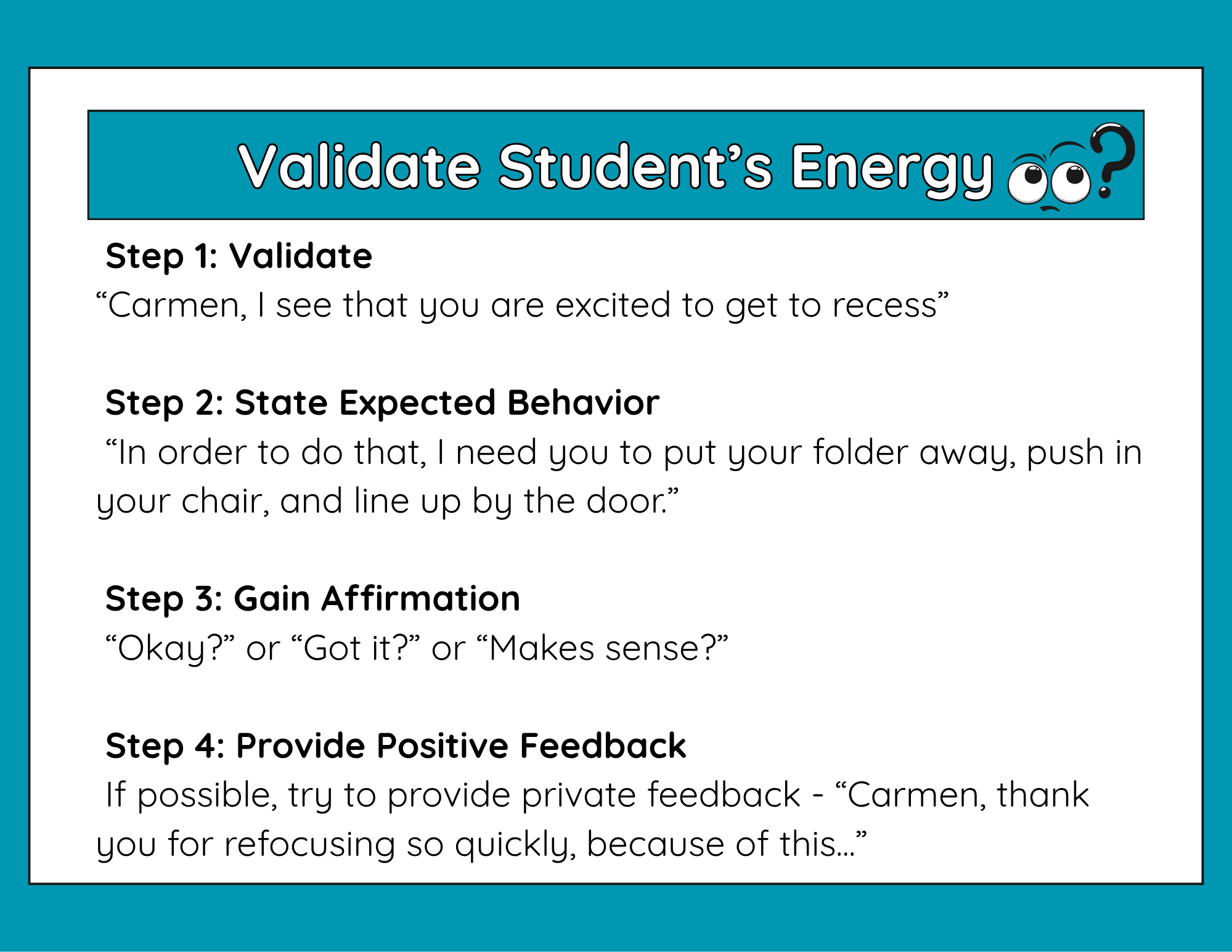
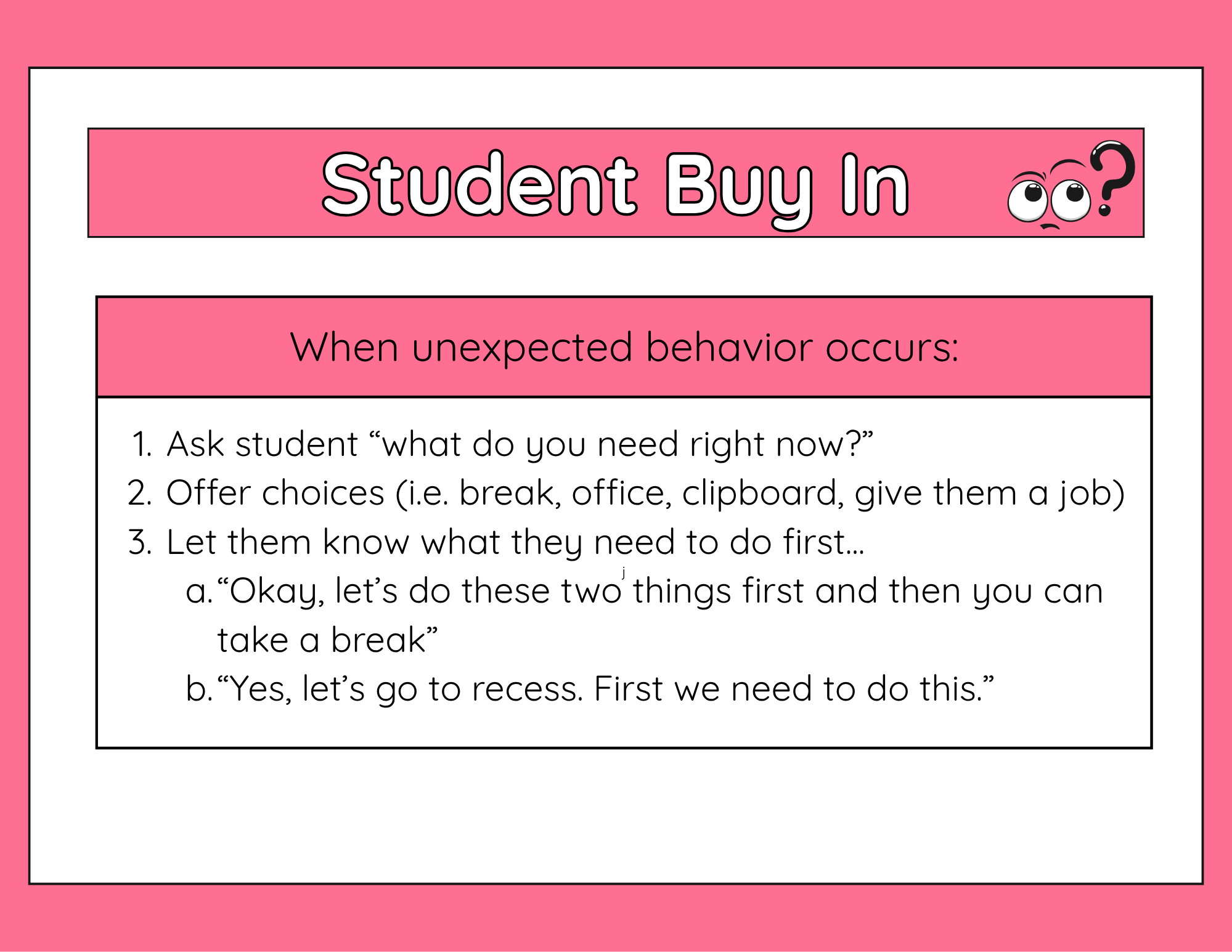
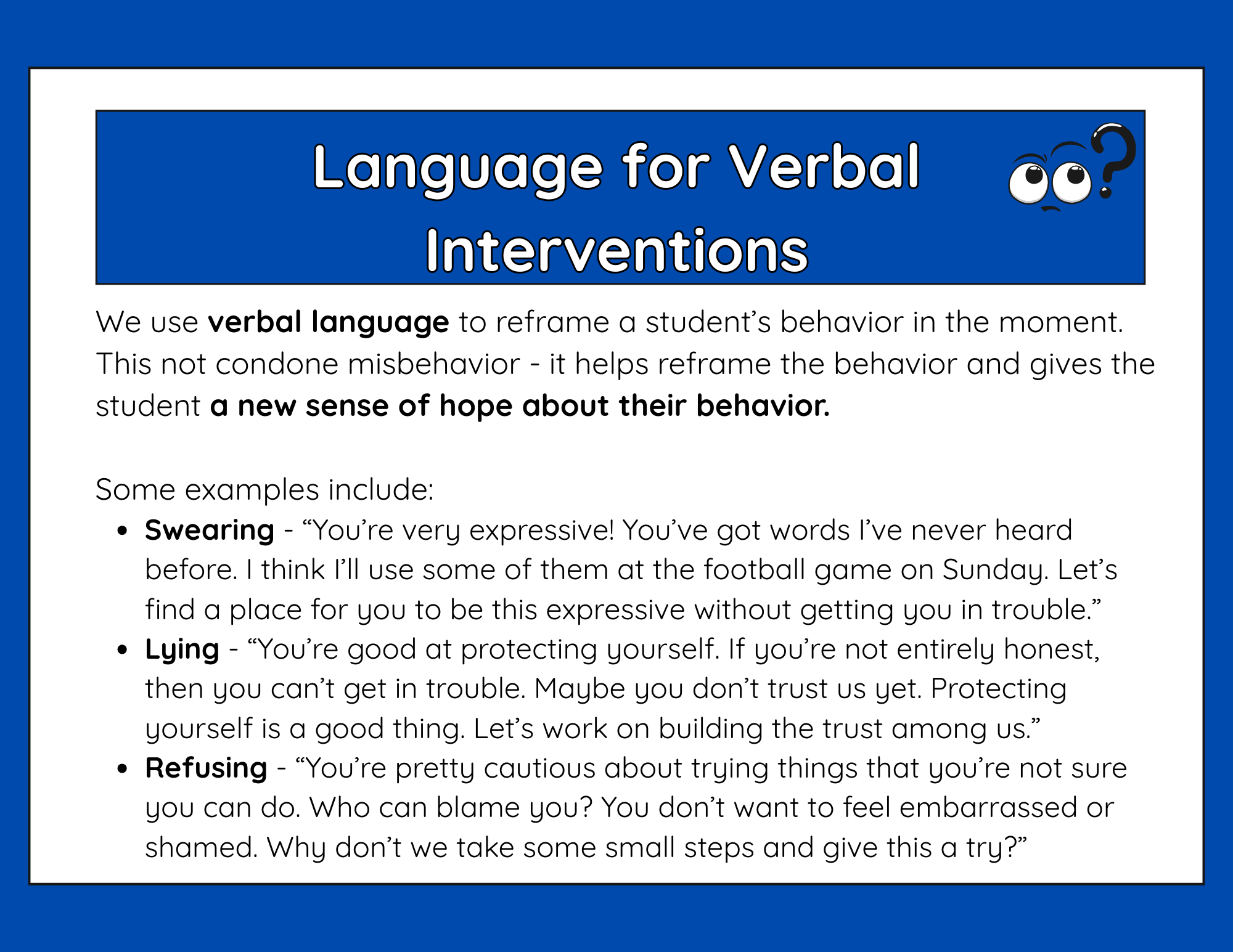
So this week, pick one situation where you’d normally move quickly to a consequence, and try a reframe first. You might be surprised how often that small shift is enough to move a student forward.