
Three-Part Formula for Responding to Behavior in the Moment
A quick framework for responding to behavior without escalating the moment.

If only we had a tool box of strategies we could pull from for every student who expressed a behavioral need. The reality is we don’t- and nothing like that truly exists-because every child is unique in their own way. Which makes responding to behavior even more interesting.
We know that all behavior is a form of communication, but that isn’t always helpful in the moment when the disruption occurs. My tip for this week is to offer a three-part formula I use for responding to behavior in the moment. In no particular order-and always dependent on the student-you can use one step or combine steps all based on the situation.
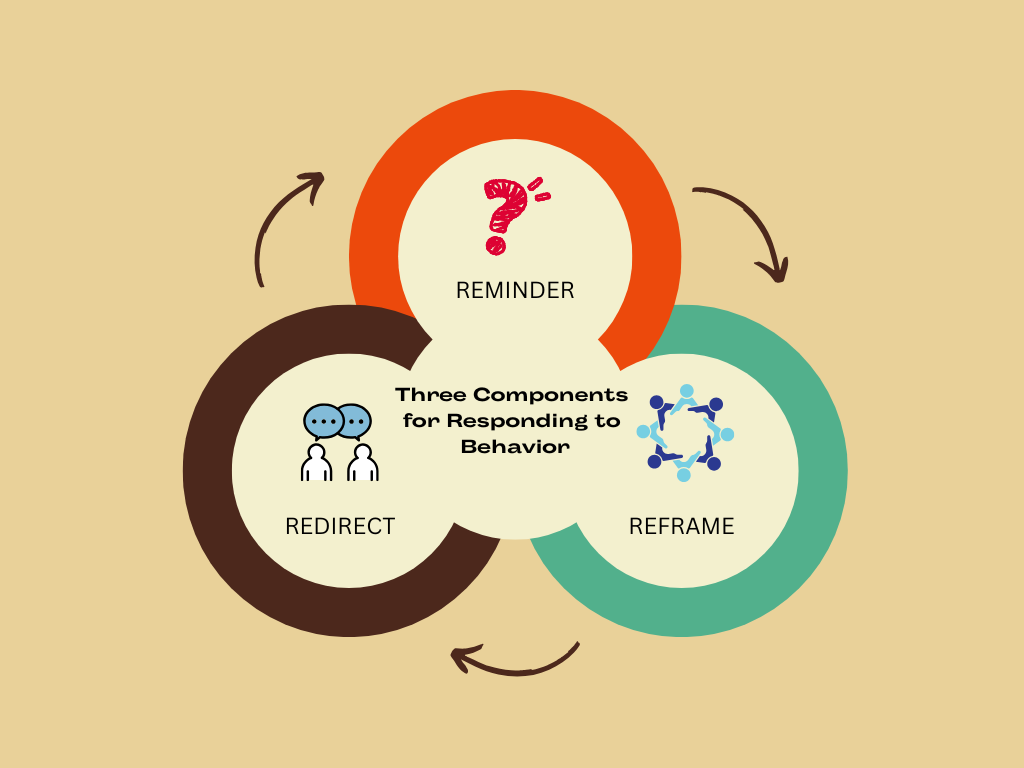
Reminder:
Best place to start
Works well for students who most likely understand the expectations but are choosing to be off task.
Communicates the desired behaviors to students and lets them to know that we believe they can meet the expectation.
Provides them with self-agency to change their behavior.
Example: “Alyssa, remind me what we are suppose to be doing right now.”
Redirection:
Clear, non-negotiable language that is matter of fact but still respectful of the student.
Works well for behavior that is getting off track or putting someone at emotional or physical risk.
The key is to keep these as brief directives, avoiding questions.
Example: “Hands to self” “I need everyone back in their seat, when I get to one.”
Reframing:
Works well for students who, if redirected or given a logical consequence in the moment, may become triggered, resulting in their behavior escalating.
Connect with student first by validating their feelings, then provide two choices and reinforce the behavior when the right decision is made.
Example: I see you are frustrated. Right now we are working on our writing. You can do this on the whiteboard or at your desk.”
Next time behavior interrupts the flow of your classroom, pause and ask yourself: does this student need a reminder, a redirection, or a reframing of the moment? Having these three options in mind can help you respond quickly while keeping the focus on getting students back into learning.